Showing posts with label Africa. Show all posts

Monday, June 21, 2010

The Revealed Truth Part 6: Mob Justice


I wanted to give the garden scene a little character so I added some flowers and a monkey. A Dutch carpenter named Wilfred did the primate sound effects. I saw two monkeys in Kiwangala. One was stealing a banana from a plantation. The other time was when I got lost riding my bike in the deep village.  I passed a pet monkey tied with a rope to a dead tree.
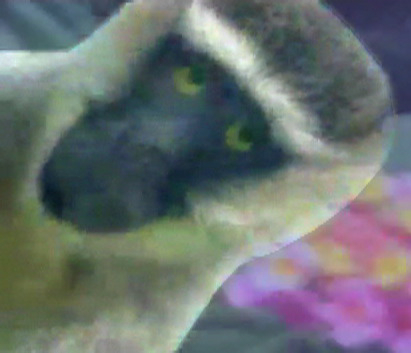
Other areas of Uganda are more plentiful. There are big primates like chimps, baboons, and mountain gorillas in the West, but the country is awash with vervet monkeys even in some of the suburbs. This monkey was photographed at the Entebbe Botanical Gardens. They have a big troupe there and not all appreciate snapshots. This monkey had a swipe at me. The botanical gardens were a savage place. I went on Easter weekend and watched a family enter the park and slaughter a goat.


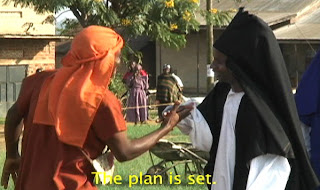
Laws in rural Uganda are on par with the wild American West of the 1800s. Anything goes. Laws that are broken are difficult to enforce. Police are poorly paid and this makes them corrupt. Cash can pay off any offense. There are times in Uganda that call for vigilante mob justice. I was in a taxi from Luweero when a tractor trailer from the D.R.C. hit a road construction worker further up. I witnessed the workers torched the truck as we passed them on the road. The driver and his teenage passenger made a run for it. The kid was captured and beaten to a pulp. The driver was being prepared to be lynched when the police caught up with him. My friend was in another matatu behind me and tells me that one of the workers threw a pickaxe at their back window.
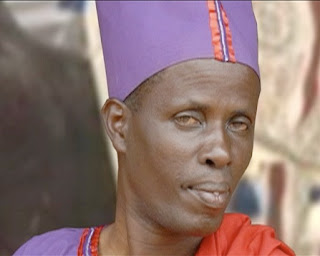
On the nights that I didn't want to mess with cooking under candlelight and a flashlight, I'd walk into the trading center for a rolex. Far from being a luxury item, a rolex is an omelet rolled up in chipatti, a greasy Indian flatbread, with shredded cabbage and tomatoes. My pal Junior cooked me up many a rolex and we got to be friends. I used to bring him jalapenos and avocados that I grew to throw in the mix.

One day Junior was gone. The night before he was accused of stealing a cell phone. A mob of townspeople grew up out of nowhere, beat him beyond recognition, and then drove him out of town. I never saw him again.

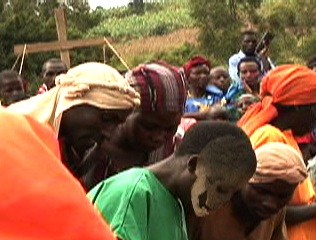
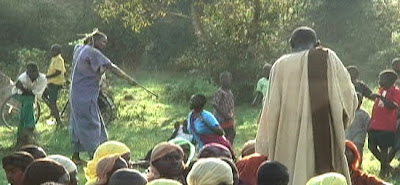
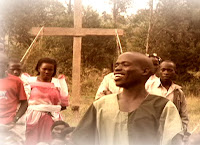
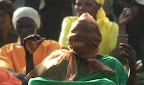
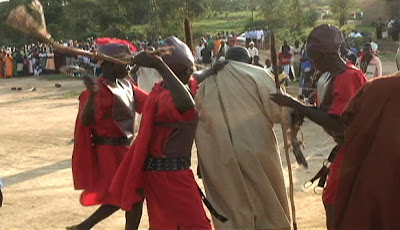
The soldiers who flog Jesus all the way to the authorities are acting out of what they've seen from experience. Justice comes swiftly and harshly in the village. It's at this point that the energy of the audience at the play's performance perks up and a crowd grows more excitable as Jesus completes each station of the cross.

The Revealed Truth Blog Series

This post is the sixth of a nine part series that takes an in-depth look at the The Revealed Truth and how rural Ugandan culture influenced the making of the film. The movie is about an hour long but I've broken it down into 5 to 10 minute blog-size episodes. The next post will feature Jesus's arrest.


The previous post was The Revealed Truth Part 5: The Last Supper.
Read more

Sunday, June 20, 2010

The Revealed Truth Part 5: The Last Supper


All of the actors in the Lazarus scene come from families that have been directly affected by the AIDS virus. In fact, no family has been able to escape the disease in Kiwangala.  Funerals are held in the village on a weekly basis.  It sounds grim, but Ugandans have told me time and again that they are making progress in fighting the disease and thing are getting better.  In the past someone infected would be dead in a month.  Nowadays, antiretroviral drugs, or ARVs, can keep someone alive for years.  The phenomenon is called the Lazarus effect.  I met one woman who had been HIV positive for 15 years and still led a healthy and productive life. 

The problem of the epidemic now is the false sense of security individuals get from believing that the disease has become benign.  Young people think that if they get infected they can just take ARVs.  This has led to an increase in risky sexual behaviors and infection rates are now back on the rise.  On top of that, HIV/AIDS therapy is heavily subsidized by foreign aid.  One of the biggest players in Uganda has been the American government's P.E.P.F.A.R.  The President's Emergency Plan For AIDS Relief is a $63 billion worldwide initiative started by President Bush.  However, while the epidemic is still growing in Uganda, a cap has been put on P.E.P.F.A.R. funds and doctor's are now forced to send away patients.  This is compounded by the hesitancy of private donors to give more in the economic recession and local corruption.  If things continue this way the battle against AIDS in Uganda could become one step forward and two steps back.


On a lighter note, we come to the most exotic element in The Revealed Truth: the donkeys.  The entire time I was in Uganda I saw just one horse.  I've never figured out why there are so few there.  It could be that there were never any wild horses in Africa, but they weren't in North America either and here they've flourished.   I thought for sure that the British would bring some equines along with them to build their colonies.    Maybe it has something to do with the equatorial tropical environment of the or that Uganda's such a small country that there's no need to travel long distances.  Who knows.  They're just not here.

The play's were striving for authenticity and imported these donkeys from Kampala.  They became a spectacle in the village and drew a crowd even before the play started.  People would gather around and shriek in awe at the sight of the beasts.  It's was like when we go to the zoo in America and see the elephants for the first time.  One woman asked if I feared the animals.  I told her no.  Then she asked me if I eat them in my country.  I played the part of a good ambassador and replied in the negative.  I didn't want to go into what goes on at the Jello factory.  I do know that they eat donkey in other parts of Africa.  I discovered that at an all you can eat Ethiopian restaurant in Kampala when I asked the waiter about the mystery meat at the buffet.  Fish and grasshoppers aside, I don't care to eat meat so I can't give a review on the taste of donkey, but I can tell you that it looked a lot like ground beef.

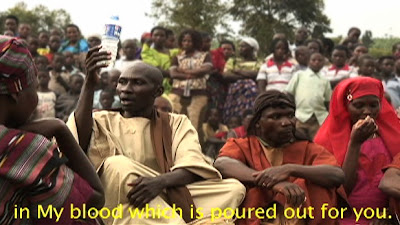
Speaking of strange dinners, we've finally come upon one of the strangest Last Suppers I've seen.  It's also one of my favorites because of it's unintended humbleness.  Like Veronese's Feast in the House of Levi  mentioned in the introductory post of this series, this Last Supper has a carnival atmosphere.  Jesus can hardly be heard over the whirr of the generator, squaking of the intercom, and snickering of the crowd.  The disciples dig into a bag of bread.  Ugandan bread is bland probably has the same consistency of the unleavened bread that was broken at the original Last Supper.

Instead of a chalice of wine, Jesus passes around an old plastic bottle of Rwenzori brand drinking water.  This could be a message of temperance.  The Born Again churches that I worked with didn't drink alcohol.  Maybe the director of the play was trying to downplay an mention of wine whatsoever.  The reason for this prohibition also might have something to do with Uganda being the number one consumer of alcohol per capita in the world.  Bars are open twenty four hours and local brew is potent and plentiful.  Vodka is served doubleshot size in a plastic baggie and costs about a 30 cents each.   I've seen old men drunk in the street at 8AM and a two year old throwing a tantrum until his mother soothed him with a bottle of waragie.   There's reason to be afraid of liquor.  I once asked a girl from the church out to a neighborhood housewarming party.  She declined telling me that she doesn't go to discos.  There would be drinking and even dancing there.  It was the equivalent of "Sorry, I'm washing my hair tonight".


The Revealed Truth Blog Series

This post is the sixth of a nine part series that takes an in-depth look at the The Revealed Truth and how rural Ugandan culture influenced the making of the film.  The  movie is about an hour long  but I've broken it down into 5 to 10 minute blog-size episodes.  The next post will feature Jesus's arrest.


The previous post was The Revealed Truth Part 4: Let The Little Children Come to Me.
Read more

Saturday, June 19, 2010

The Revealed Truth Part 4: Let the Little Children Come to Me


This chapter of The Revealed Truth opens up with some classic bargaining by Judas. Ugandans love to make a deal. Judas may seem overacting here, but I would get just as expressive trying to buy passion fruit from the neighborhood bodega or setting the price for a taxi. When you're in the mood, you can get some really great deals. If you're tired and just want to make the sale, the vendors will rip you to shreds. Most commodities don't come with a set price. The vendor will begin by sizing up the consumer. As I was a Muzungu (white man) the seller immediately inferred that I was also an Omugagga (rich man). Prices start on the astronomically high side.  I'd counter with something ridiculously low and hopefully we'd meet somewhere in the middle.  If all else fails, turning your back in the middle of the transaction can get you a dramatic discount. Bargaining is true capitalism because each transaction reevaluates the product's supply and demand.  Switching to English during a deal will automatically chalk up a muzungu tax.


As Jesus figures out how He's going to feed the masses with two loaves of bread there is a disturbance in the background. One of the shepherds chases the neighborhood kids around and swats at them with a stick. The shepherd also doubled as the play's enforcer of crowd control. If a child got too close to Jesus or the disciples he would beat them. It provides some real life foreshadowing of Jesus's Let the Little Children Come to Me sermon, but nobody watching the performance seemed concerned about the violence.

While Uganda's youth empowerment agenda looks very progressive on the books, it's not practiced. Corporal punishment is illegal, but I saw students at the school caned many times. When I ran into a teacher flogging a kid I'd go into shock and just stand there. The teacher usually would look up, see me, get embarrassed,and take a break until I left. Most headmasters will publicly acknowledge that child abuse is wrong and bad for donor relations.  However, when faced with the choice to stop they don't know an alternative.  The issue runs deeper than discipline. In one study 98% of the Ugandan children interviewed experienced physical or emotional violence at home.  In the hierarchy of society children are one peg above animals because they have better motor skills.  It's a utilitarian mindset.   Children are valued because they can work. There are no microwaves or washing machines, but there are lots of kids. Many students attending my school were from child-headed households and had no parents to advocate on their behalf. The education was free, but many days out of the week their classes took place out in the fields where they were "learning" to dig trenches or clear brush.  

America is on the other end of the spectrum.  We put our children on a pedestal.  We spoil kids and make them whine from overindulgence. The youth culture fuels our economy with the music, movies, and media that makes our country famous. Yet, all expenses are paid with a parent's credit card.  Most American children under 12 years aren't their family's breadwinners.  We have child labor laws against that.  In Uganda, if a child doesn't bring home they don't eat.

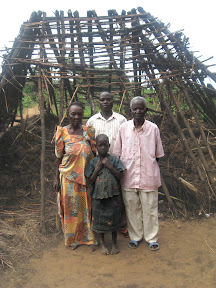
Perseverance of families in this environment is amazing.  Despite the prevalence of abuse, strong family bonds are the key to survival.  Take Julius, the actor who plays the prodigal son.  He was in his mid twenties and living with his parents.  He wasn't a deadbeat sleeping on the couch, but working side by side with his parents and sister on the farm.  During the month of the play's performance his family's home collapsed.  Subsistence farmers don't have home insurance but Julius helped his aging father salvage what he could and they built the structure over again.  There is a loyalty to family, clan, and tribe in Uganda that is not found in the West.  In such an impoverished country there are very few street gangs.  The communal nature of the village doesn't allow them to form.  Even if a child's parents weren't in the picture, their aunts, uncles, and grand parents were around to provide a support system.


The Revealed Truth Blog Series

This post is the fifth of a nine part series that takes an in-depth look at the The Revealed Truth and how rural Ugandan culture influenced the making of the film.  The  movie is about an hour  long  but I've broken it down into 5 to 10 minute blog-size episodes.  The next post will feature the Last Supper.


The previous post was The Revealed Truth Part 3: Good Samaritans.
Read more

Friday, June 18, 2010

The Revealed Truth Part 2: Cross Culture Shock


The crowd gathers as the play gets going.  Not many people can afford cars, but many have bicycles.  This is a parking lot for them and the kid in the suit on the left is the valet.  The bags slung over the bikes are for collecting corn, bananas, or firewood.  After the show, the audience will peddle back into the fields to harvest their crops as the sun goes down and it's not so hot.  The generator in the foreground powers the sound system.  The speakers were so loud that the play could be heard from miles around.  This was not unusual for the village.  Ugandans love blasting music, public service announcements, and sermons over their P.A. systems at all times of the day and night.


Part 2 of The Revealed Truth opens up with a shot of the Kiwangala playground.  That's my neighbor Vieney and his sister clowning around.  The playground plays host to soccer matches, concerts, religious services, and once on Christmas there was a motocross rally.  On slow days cattle graze the field.

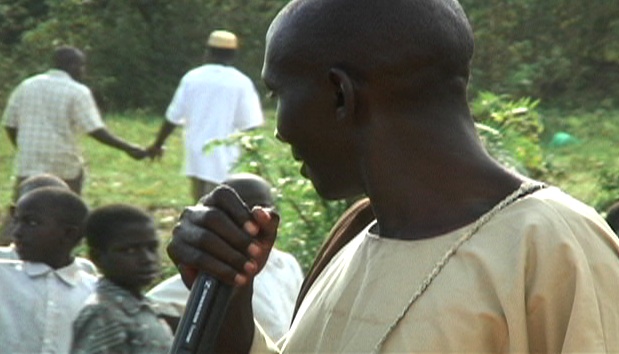
One thing that I've never understood is why Jesus speaks into a microphone.  It's not plugged in.  A CD of the audio I recorded is playing on the speakers.  The actor playing Jesus is just mouthing the words.  Nevertheless, he carries the microphone all the way up to the cross, stopping like a talk show host to to interview saints and sinners along the way.

I remember going out one night in Masaka, the city closest to Kiwangala, to watch some karaoke.  In Uganda you don't get up to sing something embarrassing, you let the professional entertainers handle that.  The music came on and performers gave it all they got with choreographed dance moves.  It was high energy, but it was also Milly Vanilli.  The singers lip-sync into turned-off microphones.  False advertising or not that was their style.  Th microphone is an aesthetic prop that makes The Revealed Truth just a long karaoke number. 

Something else that perplexes me in this bit is when the disciples gather fruit from the trees on the Sabbath.  The actors reach up into the branches and pull out a loaf of bread.  Why not fruit?  Uganda is a garden of Eden for tropical fruit.  It grows everywhere in abundance.  Ugandan bread, on the other hand, is nothing to write home about.  It's bland and, because the nearest bakery is 40 km away, often stale.  However, while most fruit is cheap or even free, you've got to have cash to buy a loaf of bread.  In some circles of village society it's a sign of wealth.  When a guest comes over for morning tea the hospitable thing to do is offer them a few slices of bread spread with Blueband margarine.  While the first appearance of bread is odd, it's a theme that naturally weaves itself throughout the play up to the Last Supper.   It's just bizarre watching it from a Western perspective where the value system is reversed.  If you walked into an American supermarket and bought a pineapple it'd be twice the cost of a loaf of Wonderbread.          
Another surprising sight in the movie are the two men walking into the bushes holding hands.  Like many agricultural societies, Uganda is conservative in its behaviors.  PDA between couples raises eyebrows.  Outside of Kampala, kissing and hugging are never seen.  A man and a woman holding hands insinuates that they have carnal knowledge of each other.  Hand holding between members of the same sex however is acceptable and common.  It's a show of fraternal goodwill, but it would make me do a double take when I passed by two burly biker dudes or a couple of coeds on their way to campus.  Often when I'd meet a man and shake his hand a game would start to see how long we could hold onto each other.  This makes introductions long and leaves you with sweaty palms, but also builds trust and rapport.

Nobody sees this behavior as gay because in Uganda homosexuality is illegal.  Earlier this year the parliament attempted to pass a bill that would give convicted homosexuals the death penalty.  It has been said that American evangelists lobbied parliament to put the bill into place.  Luckily, it caught the attention of the international community who threatened to withdraw humanitarian aid if the law was passed.  The MPs have since backed down, but the homophobic sentiment remains.  It's ironic that the camera captured Jesus and the two men in the same frame.

The Revealed Truth Blog Series

This post is the third of a nine part series that takes an in-depth look at the The Revealed Truth and how rural Ugandan culture influenced the making of the film.  The  movie is about an hour  long  but I've broken it down into 5 to 10 minute blog-size episodes.  The next post will feature the Nicodemus.


The previous post was The Revealed Truth Part 1: Shepherds and Fishermen
Read more

Thursday, June 17, 2010

The Revealed Truth Part 1: Shepherds and Fishermen


The Archangel Gabriel rouses the shepherds awake, but the cows in the background are not part of the scene. A herdsman decided to graze them in the field while he watched the performance.  During filming, the Biblical world of the play often blurred with the rural life of the village where it was performed. More examples can be found in the nativity and fishermen scenes in the video below.


The Nativity

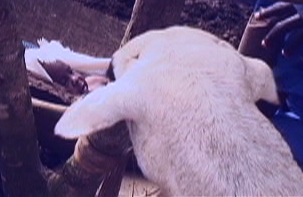
Most of the nativity scenes that I've seen usually substitute a doll for Jesus, but in Kiwangala it's not so hard to strive for authenticity in this department.  Seven of us in the cast and crew got in a saloon car and drove a few kilometers out of the trading center.  The road quickly turned from a potholed monstrosity into a single-lane, dirt path.   This is no problem for Ugandans who drive small sedans.  They tackle terrain that soccer moms with 4x4 SUVs in the U.S. would never dream of attempting.  Twenty minutes later and deep in a banana plantation we parked in front of a small shamba.  A farmer and his wife were drying coffee beans out front.  A newborn baby was napping in the shade.  Around the back were cows, sheep, and a manger.  Naturally, things fell into place quickly.  It was just a matter of putting the baby in the trough.


The Music and Animation


As the shepherds visit Jesus they sing a traditional Christian folk song.  As I was recording the dialogue for this scene, the cast spontaneously burst into this song.  When you're recording something in a language you don't fully understand you tend to zone out and focus on the technicalities of the mixing.  When the actors started singing I immediately became alert and got goosebumps.


The reprise plays over a fish animation.  I bought a whole tilapia on market day for $1.50 from a man selling them out of a basket on the back of his bicycle.  After photographing the fish for the movie I wrapped it in banana leaves and cooked it over hot coals.  It was delicious.


The Fishermen

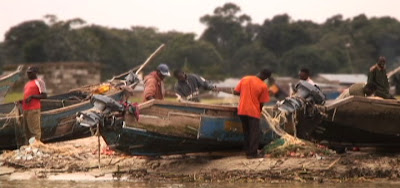
The fishing village where we filmed is one of many landing sites in the Rakai district.  They dot down the coast of Lake Victoria to the border of Tanzania.  While they are little more than shantytowns these villages have an infamous reputation.  As early as 1982, entire communities in the area had become sick with a mysterious illness called silimu, or in English "slim".  Perfectly healthy people would get really skinny and drop dead.  At first witchdoctor juju was blamed, but eventually scientists arrived from the west, backtracking Patient 0,  and diagnosed the disease as HIV.  Landing sites like Kasensero became the epicenter of the AIDS epidemic in Sub-Saharan Africa.  Over the last twenty eight years there has been a marked improvement and drops in infection rates, but the toll the disease has taken is still visible.  As a result, people live a primitive existence in mud walled homes and depend on the lake for their subsistence.


The video footage is a little shaky.  I was shooting from a fishing boat that kept tipping precariously from side to side.  I had to wade through the lake to board the vessel and as a result contracted schistosomiasis.  Yet, in retrospect it was worth it.  Shooting this scene was a special moment for me as a filmmaker.
 
The lack of economic development at the landing-site reinforces the literalness of the passion play.  The fishermen know what the apostles went through.  They've experienced the same anxieties of not coming home with a full catch.  If they caught as many fish as the apostles do in the movie, it would be the equivalent of winning the lottery.


However much the landing-site is in harmony with the life of Jesus, the real world still creeps into the film.  Jesus performs his miracle from a boat with an outboard motor and modern technology breaks our suspension of disbelief.

Likewise, filming unintentionally captured the sordid moments of the people in the village.  Near the end of the scene, a man and a woman can be seen quarreling in the background.  The woman runs into the field as Jesus comes ashore.  The man, who seems to be holding a knife, chases her down and drags her out of the frame.  The preaching of Christian values juxtaposed against the backdrop of domestic violence is a theme that will repeat itself later in the movie.


The Revealed Truth Blog Series

This post is the second of a nine part series that takes an in-depth look at the The Revealed Truth and how rural Ugandan culture influenced the making of the film.  The  movie is about an hour  long  but I've broken it down into 5 to 10 minute blog-size episodes.  The next post will feature the teachings of Jesus.


The previous post was The Revealed Truth: An Introduction.
Read more

Thursday, April 29, 2010

Nsenene


Nze nsenene. Nva lugendo.

Grasshoppers are a ubiquitous snack in Southern Uganda. They are lured by lights, trapped in barrels, and then fried up in a little oil with salt. Kids love them and the ones you see enjoying them here are orphans from Nazareth Children's Home in Nyendo, Masaka.

Nyendo’s a suburb that sits 45 minutes away from the Equator on a stretch of highway that curves around Lake Victoria. It’s a place where busses from as far away as Kigali, Rwanda and Mombasa, Kenya stop in the middle of the night for their passengers to relieve themselves and stock up on street foods like meat-on-a-stick and fried lungfish. Grasshoppers are plentiful too. Teenage street vendors peddle nsenene from minibus to minibus with same entrepreneurial spirit as the guys who feel obligated to squeegee your windshield in New York.

The coming of the grasshoppers coincides with the end of each rainy season. You know it’s that time of year again when you see fluorescent floodlights pop up with the glow of a car dealership lot. Overnight they are set up in unlikely places. They span over several rooftops in slum areas, deep in the middle of swamps, or in a neighbor’s backyard. Often the traps are assembled where there was previously no electricity, but someone has shimmed up a nearby power line with a cable for a free hook-up.

The traps themselves are metal barrels fitted with a 10 foot piece of corrugated iron sheeting. The lights are aimed at the metallic surface and the grasshoppers become dazzled by the display, much like moths around a porch light. The insects are drawn into the brilliant luminance and whack themselves on the metal sheeting. Stunned, they slide down into the bottom of the barrel. At the end of the night they are collected in plastic bags and sold at roadside markets.

The Ugandan varieties of these insects are not the same grasshoppers that you’d find in America or Europe. They’re actually a type of katydid that are closely related to the same migratory locusts that plagued Pharaoh in the book of Exodus. Like Egypt, Uganda also sits along the banks of the river Nile (and Moses has always been a popular name), but the grasshoppers there are too delicious to pose a threat. However, if the insects weren’t eaten they could strip the lush tropical environment of its foliage. On one acre of land, fifty live grasshoppers (or two recommended serving sizes in fried snack form) have the same grazing power as a cow. For a country where 80% of its inhabitants’ livelihood depends on agriculture the result would be devastating.

Yet most Ugandans don’t see themselves as agents in pest control. They consume grasshoppers because they’re a nutritious snack. Every 100 grams of grasshopper contains a whopping 20.6 grams of protein. That’s as much as in an equivalent weight of beef. Many people in the impoverished, rural areas of the country are malnourished. Grasshoppers provide them with a cheap, and often free, source of nutrition.

Nsenene is a perfect afternoon snack for kids. The orphans in the video tried nabbing a few hoppers even before they were done cooking. Nazareth Children’s Home was started in 1978 by a woman named Josephine. Many of the children you see were dropped off on her doorstep in the middle of the night. Today the orphanage looks after 25 orphans who range in age from 1 to 20 years old. Josephine’s still around, but one of the older orphans, Nankya Carol, has taken up most of the home’s responsibilities. Carol’s the young woman in the video frying up the grasshoppers. She makes sure that the other kids are healthy and that they go to school. She also keeps a small garden that provides food for the orphanage. Nazareth Children’s Home loves visitors so if you find yourself around Masaka visit them. Their postal address is:

PO Box 86
Masaka, Uganda

If you can’t make it out to Uganda, I’ve done my best to piece together Carol’s Nsenene recipe below.

Grasshopper recipe:

Collect grasshoppers- as many as you can catch
Peal wings and legs off
Soak in water for 15-20 minutes
Drain the water from pan
Add a couple of tablespoons of vegetable oil
Fry until golden brown over medium heat
Stir occasionally to prevent burning
Add salt to taste

I’d also like to thank Lisandro Torre, a Peace Corps volunteer, who served at Nazareth Children’s Home. He's the mysterious white hand in the movie that you see sampling the nsenene. Without his assistance, this video wouldn’t have gotten made.


Links
The Internet is well versed on eating weird foods and Ugandan grasshopper culture is no exception. Here are some other blogs and websites on the subject. Many have their own variations to the classic nsenene recipe.
  • The popular Bizarre Foods show on the Travel Channel featured grasshoppers on its Ugandan episode.


Read more